Colorectal Cancer Consultation· Jamaica
Colonoscopy results. Pathology reports.
What they mean and what to do next.
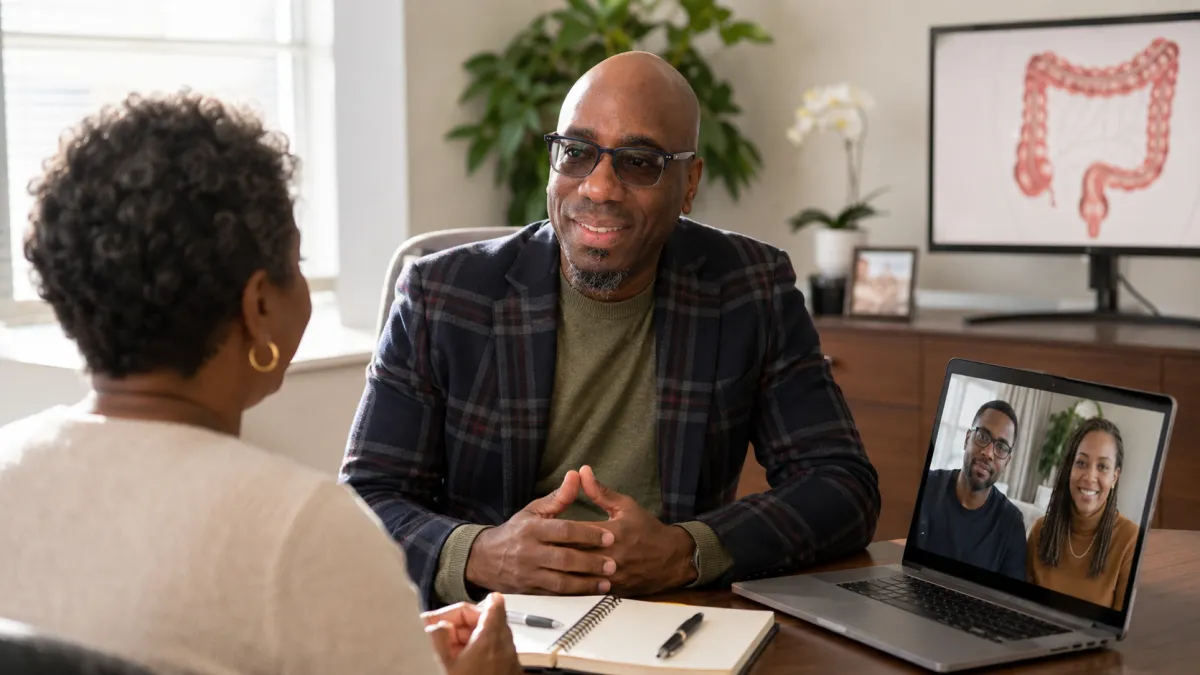
A physician-led consultation that helps you understand your colorectal cancer diagnosis, from polyp findings to staging scans, and maps out your next decision with clarity and without pressure.
Important: We provide consultations and decision support. We do not administer chemotherapy or radiation. We help you navigate options alongside your treating team.
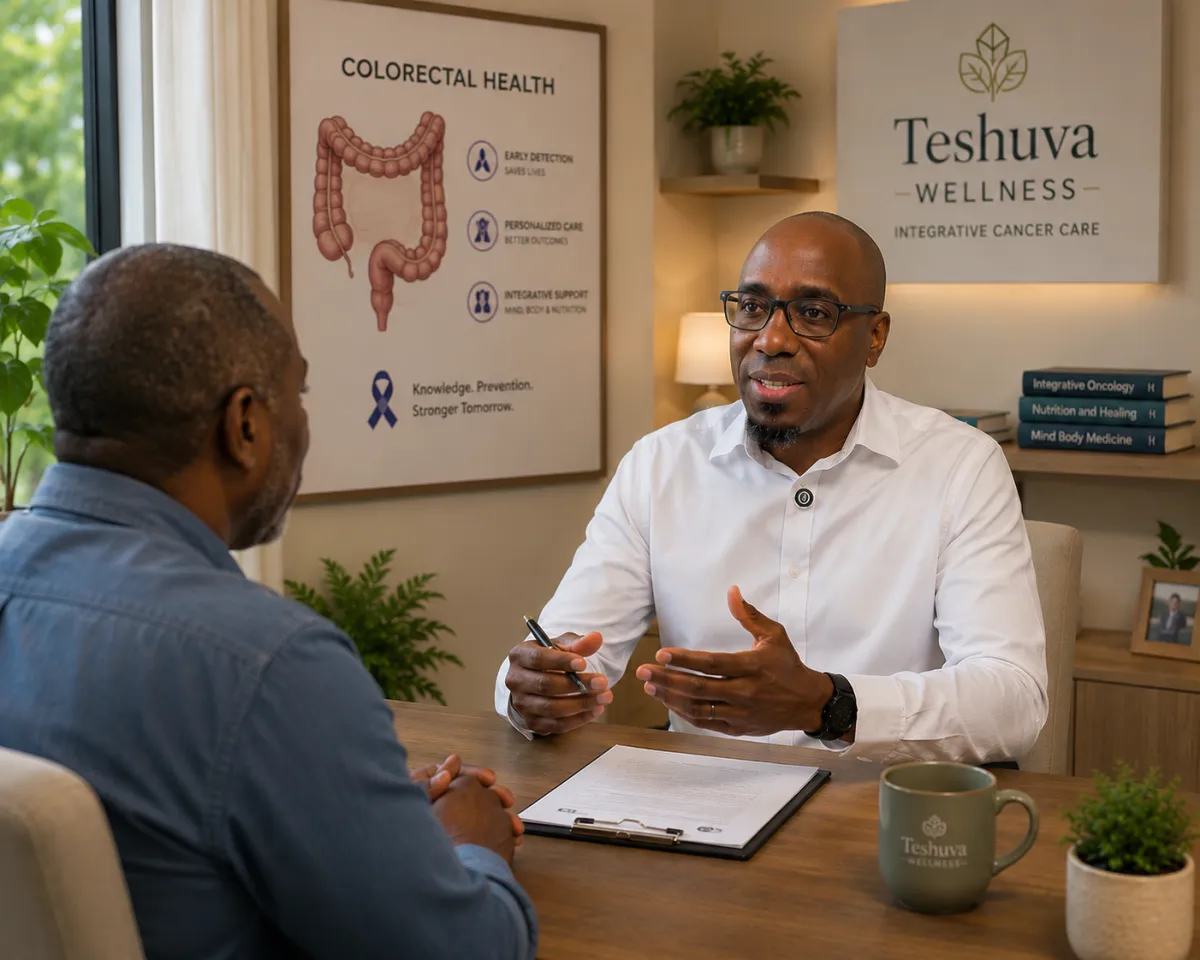
Colorectal Cancer Consultation· Jamaica
Colonoscopy results. Pathology reports.
What they mean and what to do next.
A physician-led consultation that helps you understand your colorectal cancer diagnosis, from polyp findings to staging scans, and maps out your next decision with clarity and without pressure.
Important: We provide consultations and decision support. We do not administer chemotherapy or radiation. We help you navigate options alongside your treating team
UNDERSTANDING YOUR DIAGNOSIS
Colorectal cancer outcomes depend heavily on what stage you're in, and whether staging is complete
Many patients arrive at this consultation with a biopsy result but an incomplete staging picture. Before major decisions are made, clarity on spread, local, nodal, or distant, is essential.
Pathology findings
Tumour type (adenocarcinoma vs other), grade, and whether it arose from a polyp or de novo
Staging (T, N, M)
How deeply the tumour has grown, whether nodes are involved, and whether distant spread is present
Margins and resection
If surgery has occurred, margin status determines whether further treatment is indicated
Molecular markers
MSI/MMR status and KRAS/BRAF mutation status increasingly shape treatment decisions
Is this for you?
You may benefit from this consultation if…

You were diagnosed following a colonoscopy or biopsy and the results weren't fully explained
You're unsure whether your staging workup is complete before treatment begins
You want to understand what surgery, chemotherapy, or radiation is actually being proposed and why
You need help preparing the right questions for your surgical or oncology team
You have family overseas who want to be involved in decisions via Zoom
You want integrative support and lifestyle considerations discussed as part of your plan
Key decision points
Where patients most often need guidance
Colorectal cancer treatment is highly sequence-dependent, the order of surgery, chemotherapy, and radiation matters. Getting clarity on sequencing early prevents costly detours.
Is my staging workup complete, or are there scans or tests I should have before any treatment decision is made?
What does my pathology grade and margin status mean for my prognosis and treatment options?
In rectal cancer: should chemotherapy or radiation come before surgery, or after? What is being proposed and why?
What does MSI or KRAS status mean for the treatment options available to me?
If a colostomy has been mentioned, what does that actually involve and is it reversible in my case?
What questions should I ask my surgeon before agreeing to an operation?
Preparation
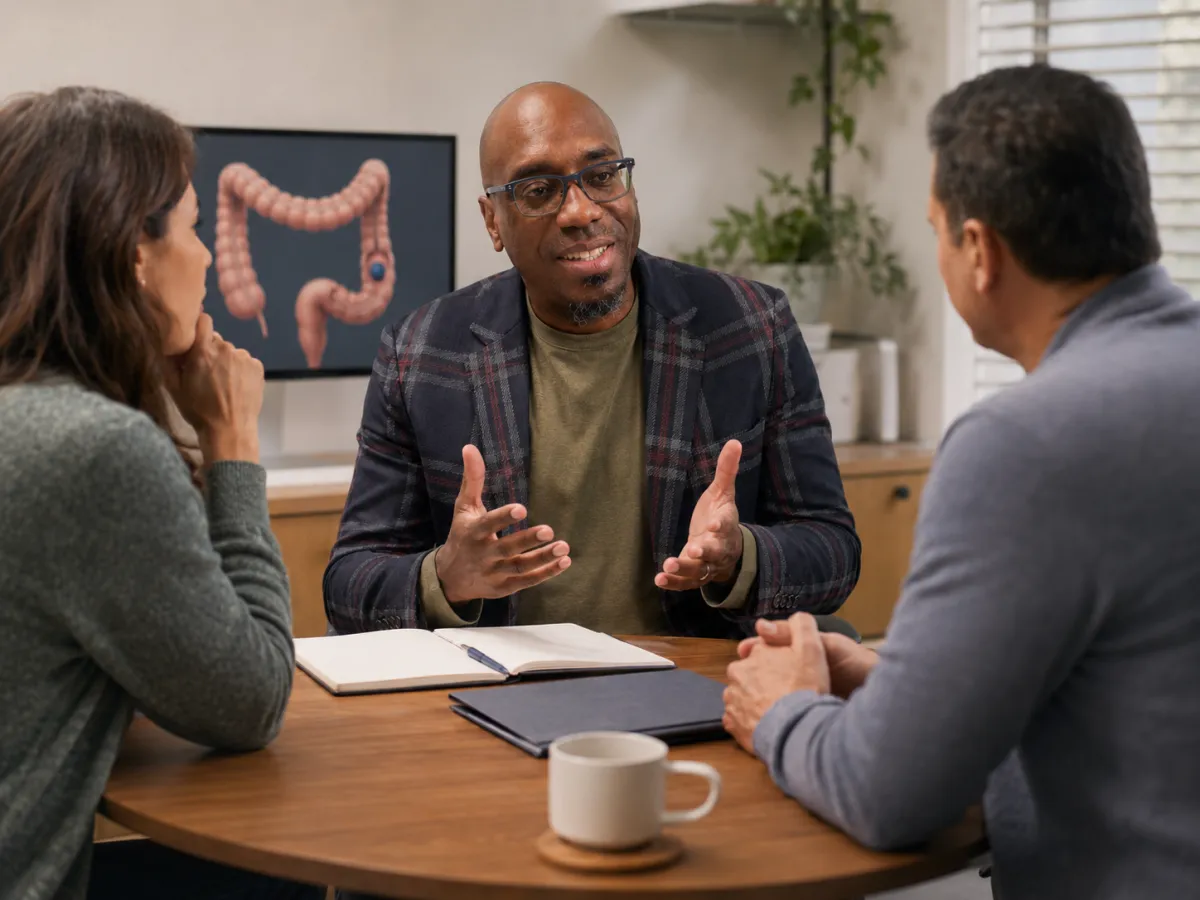
What to bring... and what we look for
Bring to your consultation
Colonoscopy report and any endoscopy findings
Biopsy pathology report
Imaging reports, CT abdomen/pelvis, MRI rectum, PET if done
Surgical report if resection has already occurred
Any tumour marker blood tests (CEA)
Medication list including any recent changes
If you don't have all of these yet, that's fine, we'll identify what's missing and what to request.
Common questions... answered
Frequently asked questions
From diagnosis to recovery, here is what patients and their families ask us most, honestly answered.
Where can I get a colorectal cancer consultation in Jamaica?
Teshuva Wellness offers physician-led colorectal cancer consultations at our Montego Bay clinic and via Zoom. No specialist referral is required. Patients from Jamaica, the Caribbean, and the diaspora in North America and the UK are welcome. Contact us via WhatsApp at +1 (876) 787-8197 to arrange a session.
What is the difference between colon cancer and rectal cancer, does it change the treatment?
Yes, significantly. Rectal cancer treatment often involves radiation or chemotherapy before surgery (neoadjuvant therapy), while colon cancer is more commonly treated with surgery first. The anatomical location of the tumour, how close it is to the anal sphincter, also affects surgical options and quality-of-life outcomes, such as whether a colostomy is needed. Understanding this distinction is one of the first things we clarify in a consultation.
What does MSI-high or mismatch repair deficiency mean for colorectal cancer treatment?
MSI-high (microsatellite instability high) or dMMR (deficient mismatch repair) colorectal cancer behaves differently from MSI-stable tumours and may respond well to immunotherapy drugs called checkpoint inhibitors. This biomarker is now routinely tested and can significantly influence which treatment options are available. We explain what your specific result means for your situation.
I was told I need a colostomy, is that permanent?
Not always. Whether a colostomy is temporary or permanent depends on the tumour's location relative to the anal sphincter, the surgical approach, and how the bowel heals after the procedure. For some patients, a temporary colostomy is reversed after recovery. This is one of the most emotionally loaded topics we address, we help patients understand the surgical reasoning clearly before any decision is made.
Preparation
Ready for clarity?
Book in Montego Bay or join by Zoom from anywhere. We'll walk through your reports together, clearly.
Teshuva Wellness
Physician-led integrative oncology and cancer consultation in Montego Bay, Jamaica. In-person and Zoom consultations available worldwide.
DISCLAIMER
The information provided on this website is for educational purposes only and is not intended to diagnose, treat, or replace medical advice.
Always consult your healthcare provider before making decisions about your care.
Teshuva Wellness makes no guarantees of specific outcomes and assumes no liability for actions taken based on this content.
Location
Shop 7A Sagicor Commercial Centre,
Montego Bay, Jamaica
Hours
Monday — Friday
9:00am — 5:00pm
Contact
Telephone/WhatsApp
(876)-787-8197